|
 |

Active Projects
| Urban heat and future city development |
|---|
August 2026
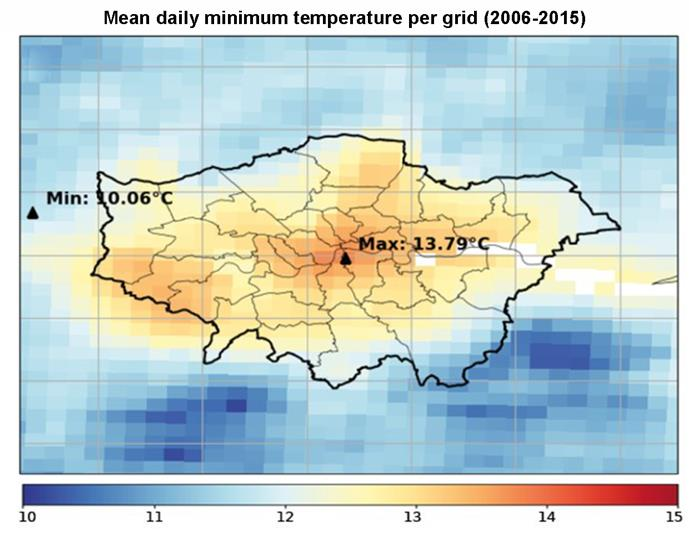
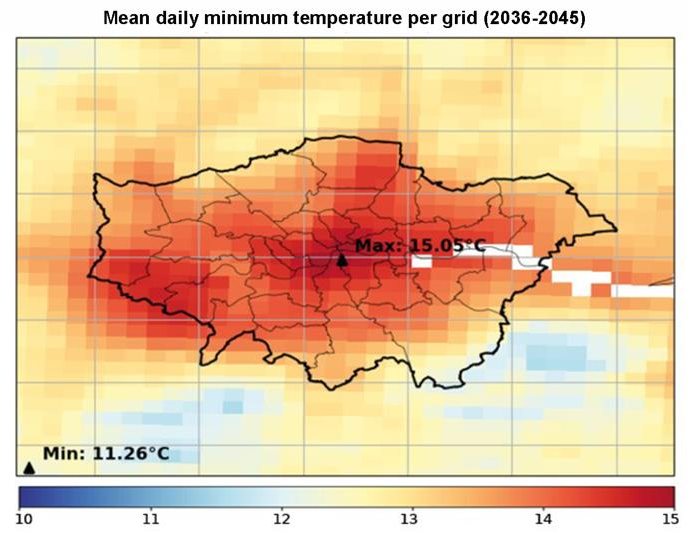
Cities are often warmer than their surroundings, especially at night, because buildings, roads and other urban surfaces store heat during the day and release it after sunset (World Meteorological Organization, 2023; Ravilious, 2026). Climate change will raise background temperatures (Poynting, 2025), while the way cities grow may change where and how strongly heat is experienced. This project will examine five major cities, including London, New York City, Hong Kong, Mumbai and Lagos, to understand how future warming and urban development interact.
Using CPDN, volunteers’ computers will run many high-resolution Weather Research and Forecasting (WRF) model simulations. The project will compare present-day conditions with a climate state around 2°C warmer than pre-industrial levels, following the warming-level logic of the HAPPI framework (Mitchell et al., 2017). Under the same future climate-change forcing, it will compare today’s urban form with contrasting development pathways described in policy documents.
The simulations will estimate hot-night frequency, cooling degree days and cooling degree hours, which combine the intensity and duration of heat relevant to cooling needs (Lizana et al., 2026; Miranda et al., 2023). By separating climate and urban-form effects, the project will quantify the additional urban heat burden and examine implications for cooling demand, pressure on electricity systems (Mooney et al., 2025) and unequal exposure to heat (Doan-Nguyen, 2024).
References
- Doan-Nguyen, R. (2024, July 8). Scorched by history: Discriminatory past shapes heat waves in minority and low-income neighborhoods. AP News. Read online.
- Lizana, J., Miranda, N. D., Sparrow, S. N., Wallom, D. C. H., Khosla, R., & McCulloch, M. (2026). Global gridded dataset of heating and cooling degree days under climate change scenarios. Nature Sustainability, 9, 470–480. Read online.
- Miranda, N. D., Lizana, J., Sparrow, S. N., Zachau-Walker, M., Watson, P. A. G., Wallom, D. C. H., Khosla, R., & McCulloch, M. (2023). Change in cooling degree days with global mean temperature rise increasing from 1.5°C to 2.0°C. Nature Sustainability, 6, 1326–1330. Read online.
- Mitchell, D., AchutaRao, K., Allen, M., Bethke, I., Beyerle, U., Ciavarella, A., Forster, P. M., Fuglestvedt, J., Gillett, N., Haustein, K., Ingram, W., Iversen, T., Kharin, V., Klingaman, N., Massey, N., Fischer, E., Schleussner, C.-F., Shiogama, H., Sparrow, S., … Zaaboul, R. (2017). Half a degree additional warming, prognosis and projected impacts (HAPPI): Background and experimental design. Geoscientific Model Development, 10, 571–583. Read online.
- Mooney, A., Hancock, A., & Kazmin, A. (2025, August 3). Europe’s electricity system tested by heatwaves as air-conditioning use soars. Financial Times. Read online.
- Poynting, M. (2025, November 5). How climate change worsens heatwaves, droughts, wildfires and floods. BBC News. Read online.
- Ravilious, K. (2026, August 6). Weatherwatch: Paving over front gardens is leading to hotter nights. The Guardian. Read online.
- World Meteorological Organization. (2023). Guidance on measuring, modelling and monitoring the canopy layer urban heat island (CL-UHI) (WMO-No. 1292). World Meteorological Organization.